The Golden Temple Of The Sikhs

The Golden Temple Of The Sikhs
The Golden Temple of the Sikhs, in the Punjab region of northwestern India.

The Wagah Border Crossing, one of the most contentious borders in the world. I crossed here and spent an oh-so rewarding week inside Pakistan.

Sunday, December 2, 2018

The Gurkha Rifles


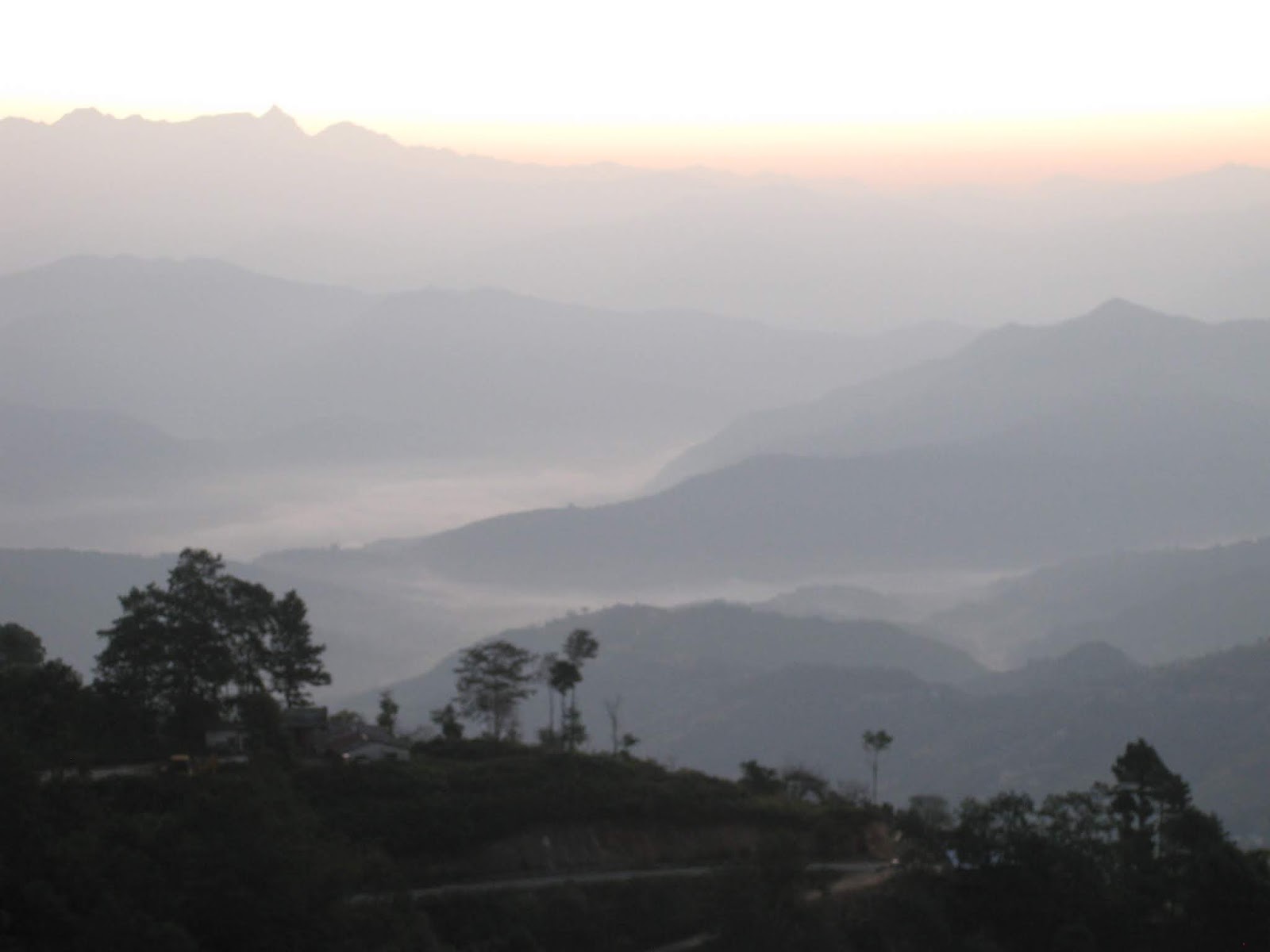
The "mid hills" region at dawn.  Note winding road at bottom.


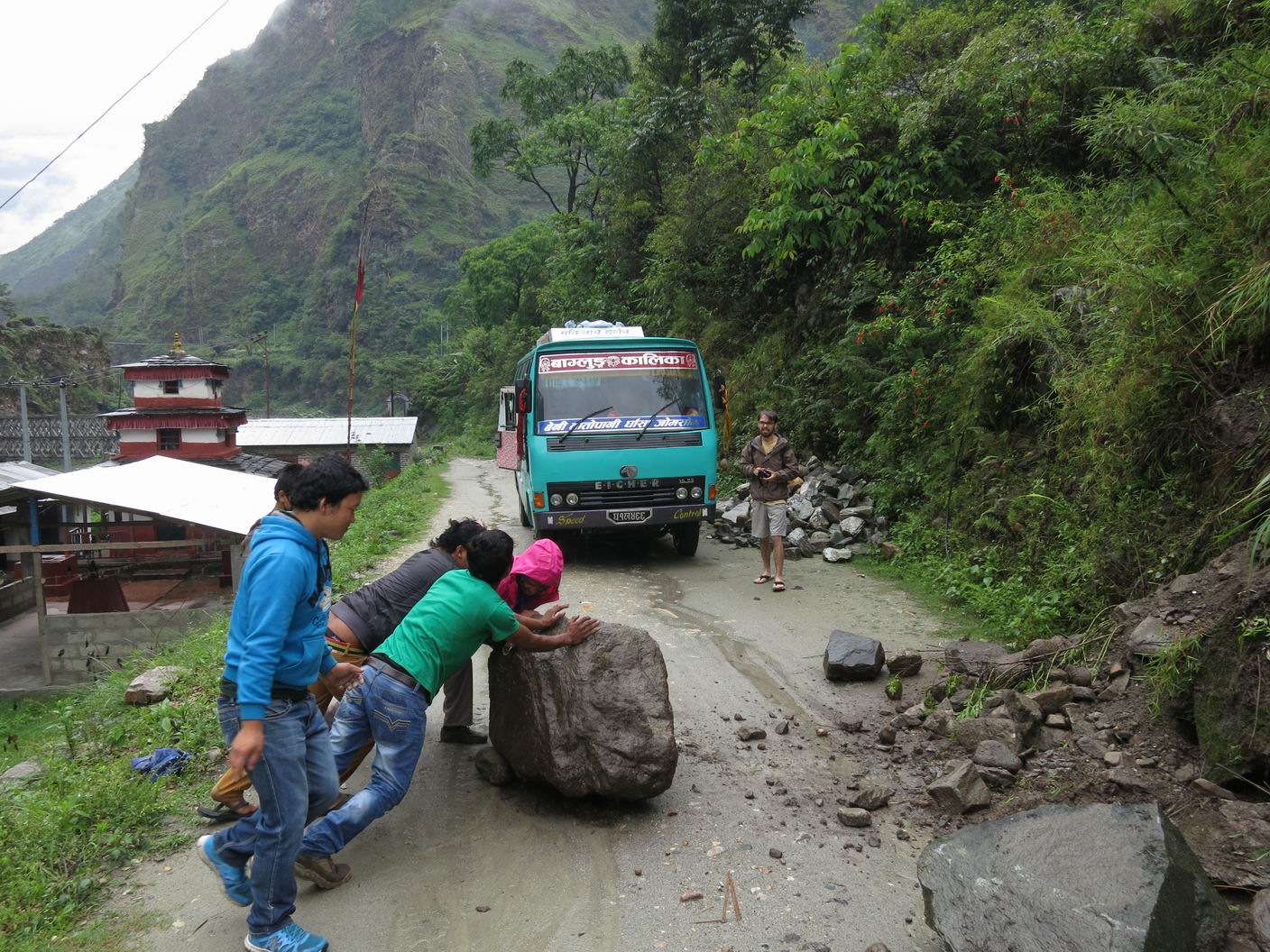
The second week in Nepal I took a bus trip out of Kathmandu.  The route wound its way over high passes, then dropped into valleys where sheer mountainsides fell off into raging rivers. 

We passed through what is called the "mid-hills region."  With the great Himalaya Range to the north, the steamy lowlands to the south, in many ways this is the beating heart of Nepal.  And this heartbeat, shall we say, can be a little irregular.  In fact, I alternated  between being awestruck at the scenery and outright terrified.  It took me two days to recover from the pounding, it was so rough.

(A lot of the roughness was caused by re-building of roads, I was told, and should be alleviated in coming years as those projects wrap-up.)


Note snow-capped Himalayas in background.


A rest stop was needed about here anyhow.


We stopped off at the city of Gorkha.  The tribal peoples there are famous as warriors and have been recruited by the British for two centuries as mercenaries.  Living at the altitudes that they do, they have fantastic endurance and make great soldiers.  Something in the genes, I'm told.  Their austere upbringing in the hills and the way of life there has much to do with it as well.

The Royal Gurkha Rifles, as they're known in the U.K.  Some of the Queen's own.  And their trademark curved knives, the khukuris, kind of a cross between a Bowie knife and a machete.


Nepalese Rangers, similar to Gurkha Rifles.  Note trademark cocking of the hats.


 ...and khukuri knives on waist belts.


Image result for khukuri knives
A khukuri (smaller knives are for sharpening).


Beyond their prowess as a military unit, the Gurkha Rifles bespeak something larger about Nepal, one of the poorest countries in the world, and the lack of economic opportunity there.

I set out on a hike one day from a village in this middle hills region.  Descending a stone pathway, I was passed by a teenager laboring under a wicker basket.  He was panting hard and soaked with sweat.  Peering down into the basket, I could see only rocks and sand therein, a heavy lot of it.

"What are you going to do with that?" I asked.  "Build something?  Building materials?"

"Oh no," he said.  "I'm in training for the Rifles, the Gurkha Rifles.  Tryouts are coming up and I need to be ready."


The Gurkha Rifle wanna-be.  Note head-strap for his basket.


And there he goes!  Back up the hill once again.


He went on to explain that being selected for the Rifles was not just a job, it was pay and benefits, a pension afterwards, and you awarded citizenship in the United Kingdom, able to live in any of the Commonwealth countries -- Canada, Australia, New Zealand, etc.

"It's not just for me," he went on, "for my family.  We don't have that much.  And you get to be a Rifle...My Uncle was a Rifle", he smiled, a smile imbued with much pride.  And pride has a lot to do with it, I learned, pride for him, pride for his family, even for his village.  They would all hold their heads higher, should he make it.

I tried to compliment him on his speaking of English, which was also part of his preparation for the tryouts with the British.  But I found myself talking into thin air -- he had turned and was running back up that hill, continuing his training.


Popular symbol in Nepal -- crossed khukuris.


Popular saying as well.


Quite simply, being selected for the Rifles is an avenue of opportunity for young people in Nepal, a way out of the poverty into which many of them are born.  The British come every year and hold try-outs in cities about the country.  But it's a tough road --  only two hundred or so are chosen by the Brits all told, while twenty-some thousand show up for the tryouts.

In the last few years even more show up because the British are now accepting women into the ranks, to be used in various non-combat roles.  And I saw young women in training here and there about Nepal as well. 

The Gurkha bravery and ferocity in battle are the stuff of legend, and a lot of it can be learned at the Museum of the Gurkha Rifles in Pokhara, Nepal...


The museum.


Image result for gurkha rifles, world war ii
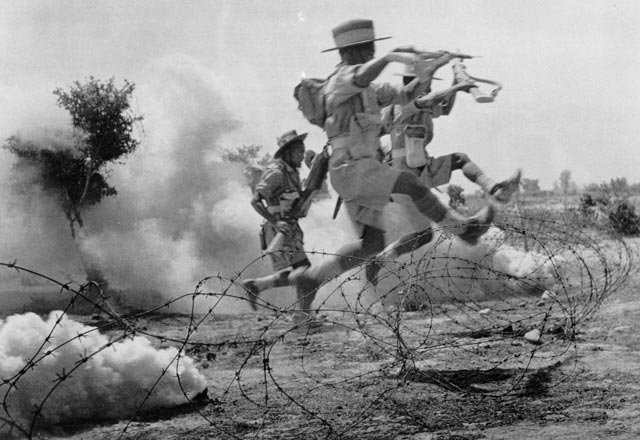
Standing inspection during World War II as part of the British Army.


Image result for gurkha rifles world war ii
Gurkhas in training circa 1942.


In a sense, acceptance into the Rifles is a type of guest worker program for Nepalis.  Besides the military, many of them "go off" to construction and service jobs throughout that part of the world.  For a family member to work in another country for six months, then return home for six months is part of life for many families in Nepal.  And when a member does return home, he's often feted like a conquering hero. 

However,  because of the warrior heritage of many of Nepal's hill peoples, none of these other jobs has the benefits or the prestige of being one of the famous Rifles.  The motto of the Royal Gurkha Brigade speaks volumes:    

Better To Stand And Die Than Be A Coward


Despite that we spoke for only a few minutes on that stone walkway that day, here it is weeks later and I find myself hoping that that kid made it!


Image result for gurkha rifles logo


[PART THREE TO FOLLOW NEXT WEEK]


Sunday, November 25, 2018

Intro To Nepal -- Holy Festivals And High Tragedy


From 30,000 feet -- first look at the Himalayas.


Talk about timing...

Emerging from the terminal at Tribhuvan International Airport and haggling with a cab driver for a ride into center-city Kathmandu, I had little sense of what I was heading for.  

I shared the ride in the tiny Suzuki taxi with a "Kiwi," a fellow traveler/adventurer from New Zealand.  The driver zipped in and out of jams of vehicles, roller coastered us over potholes, swerved around dogs humping in the middle of the road...

Somewhere in there the driver turned to us and imparted, "So very lucky you're here now.  Vejaya Dashami starts in three days."

The Kiwi and I looked at each other perplexed.  We mouthed almost in unison:  "Vay-am dash-whaaat????" 


Dusty streets of Kathmandu.


No traffic signals either!  Free-for-all!  


Traditional Nepalese caps in the Thamel district.


Eventually we were dropped off in the Thamel district, the tourist zone, and the New Zealander and I parted off to our respective lodgings.  Even though the recommendation came off the Internet, my guest house turned out to  be an excellent choice -- clean, reasonable and down a quiet alley away from the madhouse streets of Kathmandu.

The staff not only was friendly and answered my pesky questions with patience, they called me "Mr. James," a title of some respect.  This made me feel like one of the White Rajahas, even though I am your basic budget traveler, to put it mildly.


Staff at guest house. "My boys," as I called to them.


Temple wall with both Buddhist and Hindu symbols.


Corner market (convenience store?).


Nepal is primarily a Hindu country (Buddhists are in the minority) and the main Hindu festival of the year is called Vejaya Dashami, as that cab driver was trying to get through to us.  It spans ten days and features family get-togethers, feasting, gift-giving, drinking, dancing, gambling, and more -- much more, as I was to find out.

Half the country is on the move during this time, it seems, traveling off to relatives, returning to home towns, etc.  Much like our Thanksgiving or Christmas holiday period.

(Gambling is illegal in Nepal, but is allowed during this festival time.  And from what I could see traveling about the country, it is partaken of with gusto then.)


Marigold wreaths to be worn during the festival.


Holy men provide guidance and blessings at the temple squares.


Ring the bell after making a temple offering


A few days later I happened into the old royal city of Bhaktapur, known for its Vejaya Dashami festivities.  

Hundreds of people clad in orange and red gathered at the temple square, red dye on their foreheads, green strands of bamboo behind their ears.  A yearling buffalo was led out in front.  Priests were chanting up a storm.  To the clanging of cymbals and beating of drums, a man in ceremonial dress took up a sword and whacked off the bull's head!

The crowd was locked onto this (except for a few tourists who about passed out) as the spurting blood was caught up into brass goblets and sprinkled about the temple.  The remnants were then placed before various shrines and statues.  The smell of incense, more offerings, this time of bananas, rice, slaughtered chickens...more prayers and chanting.  All in all, quite a show.


Buffalo bull about to be sacrificed.


What's left of him...a few hours later.


Chickens about to meet their fate as well.


I also visited the city of Pokhara, ninety miles to the west of Kathmandu and a center for trekking and mountain climbing in Nepal.  The city sets at the base of the high massif (wall) of the Himalayas and when the weather is clear the mountains are plainly visible.  Sometimes when the optics are right, it seems as if you could reach out and touch them!

My first night there a rainstorm lashed us with fierce winds down where I was at 5,000 ft.  But up at 18,000 feet, two miles plus above us, where a team of climbers was tented up for the night in an attempt to climb Mt. Gurja, it was a different story...

This link describes what happened:  https://news.sky.com/story/nine-climbers-missing-on-nepals-mount-gurja-after-storm-hits-camp-11524889

Rescue attempts were mounted from a nearby airport and the bodies later helicoptered in to there.  Like I say, I was ensconced in the vicinity of this, although it occurred far, far above, up in thin air, where it's almost a different world.  Nonetheless the incident had an impact on many of us.

In the aftermath, prayer flags were hung out and the monks were chanting for days on their behalf.  The smell of incense in memoriam was everywhere.  


Looking toward where nine men died Oct.13.  Prayer flags in foreground.


Remember, eight of the ten highest mountains in the world are in Nepal and any of them, not just the famous Mt. Everest, can turn deadly in a heartbeat!  As the incident on Mt. Gurja shows.

May they rest in peace.

[PART TWO TO FOLLOW NEXT WEEK]


Monday, December 12, 2016

In The Wake Of The Tsunami


Image result for toddy tappers
A toddy-tapper.


      In the first light of dawn, I thought that they were monkeys flitting around up there, in the crowns of coconut palms.  Then I saw one balancing heel to toe, heel to toe between the tree tops, like the Great Wallini on the high wire.

     Eventually I learned that they were men collecting "toddy" -- the nectar of coconut flowers.  And that they were called "toddy tappers."  In bare feet, sarongs tied off into a knot below their belly buttons, chewing betel nut and occasionally spewing the reddish juice, they impressed me with their hands-on-hips, can-do attitude.

     The nectar is deposited into into wooden barrels on the ground and used to make a type of liquor called "arrack."  Very popular in this part of the world.  Local rot gut, if you will.  The collection process takes place mainly along the coast and this was where I discovered something else about Sri Lanka  -- the impact of the Great Tsunami.


The Sydney Hotel.


Twelve types of arrack on the "menu" inside.


     In my guidebook the Sidney Hotel is described as a deep, dark hole of iniquity. Curiosity got the better of me one day and I ventured in for a look-see.  A few shadowy figures hunched at tables waved and invited me to sit.  "Do you serve food here?" I asked one.  "No food 'ere," came the response.  "Only liquor."

      I looked around.  Sit?  Are you kiddin'?  I was afraid that something might crawl up my leg!

     On the way out, I snapped the picture of the arrack offerings shown above.  Then I noticed a photo on the wall of the bus station across the street, taken shortly after the tsunami...


Image result for bus station at galle 2004
Remnants of the bus station at Galle.
     

     I was astonished.  On December, 26, 2004, the entire bus station had been obliterated and hundreds of people along with it.  They had no warning.  It was a holiday weekend and many bore bags of gifts and food.  One minute they were sitting waiting for transport and the next they were flailing about in angry brown water.

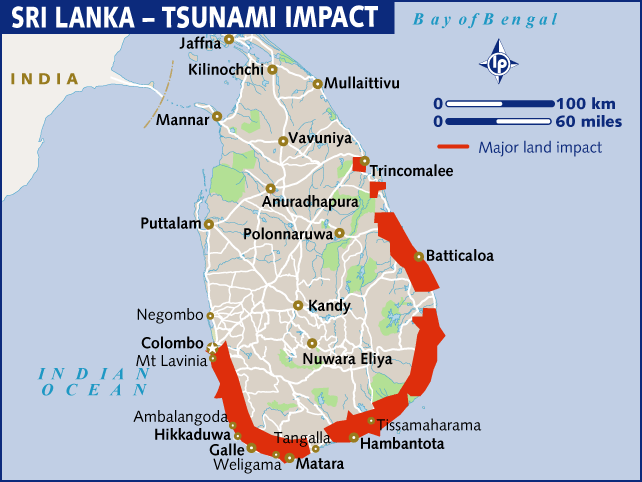
     The entire southern coast had been ravaged, with the water three and four stories high (30 to 40 feet) in some places.  Approximately 35, 00 people perished.  About half of them were washed out to sea and never found.

     Seemingly everyone there has a story about that awful day.  Most go something like this:  My...(friend, neighbor, cousin, etc.) set out to do something that morning and that was the last we ever saw of him or her.


The old Dutch Fort at Galle present day.


Image result for tsunami galle fort 2004
The same view in 2004.


      Most heart-wrenching were the train stories.  That morning the Ocean Queen Express was running the coast from Colombo to Matara when the waves struck.  The huge diesel/electric engine was slammed one hundred yards and the rolling stock crumpled up like tin cans.  Most of the passengers never had a chance.  It remains the largest rail disaster in world history by death toll, with 1,700 fatalities or more.

    In completing my loop around the country, I rode a train along that same route.  Often it ran only a few hundred yards from the ocean.  At one spot, among the palm trees, a mass grave containing about 1,000 victims of the disaster.  Even though it was twelve years ago, don't think that I wasn't casting an anxious eye seaward as the journey proceeded!

    For what it's worth, an historian there told me that he could find no evidence for previous tsunamis going back five- or six-hundred years.  This event was an aberration unto itself and the people, and the government, unprepared as a result.


Image result for sri lanka train disaster
Part of the Ocean Queen Express.


Image result for tsunami map sri lanka


      In many ways, Sri Lanka is a country on the mend.  In addition to the tsunami, a civil war wracked the island for decades, killing additional tens of thousands.  I saw people from time to time missing an arm or a leg or with burn scars only to learn that they were victims.

     Even though the conflict was settled in 2009, it made for a double whammy upon this tiny nation  -- the tsunami in the south and the war in the north.  The government was drained of resources and unable to provide as it should.  Litter and garbage disposal remain a problem, as do poverty.  Facilities for travelers are emerging but still on the rough side.


Some tourist "infrastructure."


     Despite this, many of the people are impressively educated and speak English well.  Almost to a person, they were genial and pleasant.  Even in the Sydney Hotel, where the sunlight rarely penetrates, the denizens were friendly.  My biggest concerns about crime, as it turned out, were from the monkeys.

     I came to consider the sparse tourist trappings to be an advantage -- there weren't yet many foreigners there.  All the better to experience the place and the people firsthand.

     All in all -- the culture, the food, the scenery -- added up to some memorable travel.  My advice?  See it before high-rises line the beaches!


[END OF SERIES ON SRI LANKA]


Monday, December 5, 2016

Of Deadly Snakes And Exotic Spices


     Regarding the snake thing...for whatever reason prior to this trip, I didn't get the memo.  Usually I study up on a country for months before visiting.  I pore through guidebooks and travel blogs, learning what to do, what not to do, etc. 

     Somehow this time I missed that Sri lanka has the highest percentage of poisonous snake bites per capita in the world.  The "deadly five" there account for most of them -- Indian cobras, Hump-nosed vipers, Russell's vipers... 
     
     To draw from an old saying, nothing to focus the mind like a green pit viper coiled up alongside a trail.  Nothing like knowing that if it nails you, you may have hours, not days but hours to get the antidote into you.     


Green pit viper.  Known locally as "pala palongo."

     While not even one of the deadly five, these are to be reckoned with.  One publication describes it thusly:  Venom can be quite potent and occasionally prove fatal.  Immediate treatment and medical assistance are recommended to minimize organ damage and preserve life.

     The good news is that the government encourages that school children be drilled on how to identify the different species, and how to avoid them.  Hospitals and EMTs (emergency medical techs) are trained, stocked with antidotes and ready for victims. You just have to get there in time.

     Be that as it may, I was fascinated with the snake shown above, and observed it for a good hour.


Schoolgirls in Galle.  The white uniforms are typical of here.


Exotic spices.

 
Our guide with a pepper plant...S.L. is one of the top producers.

     
     As all good historians know, Christopher Columbus did not set out to discover the New World.  What he really was after is shown above -- the spices of India and its environs, which include Sri Lanka.  He just happened to bump into the Americas en route.

     Back then the meals of Europe were so bland that eating was a drudgery as much as anything.  But not so here.

     Call this a culinary warning -- this food is not for the timid eater.   It comes right at ya. The fiery curries using different meats, the caramelized onions and chilies, the soups that make your eyes weep, and on and on.  Powerful flavors that startle the senses, widen the eyes of jet-lagged travelers lulled by the thick humidity only a few degrees off the equator.

     Unless you're one who revels in such things, you may wish to go in easy.  I practically had to take a course on how to eat there without injuring myself.  As much as in any country I've been, the food was an adventure unto itself.


Noodle soup with mutton (I think) and vegees.


Starting at top, clockwise -- lamb curry, chicken curry, fish curry, string poppers... mint tea.


Breakfast of Champions in S.L. -- fish "pocket" with Milo.

   
     The fish pocket or bun, made of delicious bread and containing tangy green fish paste (30 Rupees or 25 cents U.S.) was one of my favorites.  This may sound a little iffy, but I became fond of them from the first bite.  They jolted me awake as well as tasted good.

     (As an added benefit, at times I'd yearn for a Coca-Cola, my old nemesis, only to lose the urge by downing a fish pocket.  Evidently the spices pepped me up in much the same way.)

     I'd wash them down with Milo, a chocolate malt drink, served either cold as shown above or hot in a mug.  The problem is that humans aren't the only ones taken with such a combo, and it resulted in one of the scarier episodes of my three weeks in S.L.  In fact, even more so than the snakes, it was like something out of a cheezy horror flic...

Attack Of The Junk-Food Monkeys!


Junk-food monkeys -- with my junk food.


      One afternoon I was laying in bed with a big-bladed fan whirring overhead, reading the election news on my tablet.  I often did this type of thing to escape the mid-day heat.

     The hair on the back of my head stood up as something hunched and hairy troddled on into the room!  I had left the door open to my balcony, never dreaming that anything would bother two stories up.  But a monkey, scabbed and shedding patches of hair, bee lined up to a bureau a few yards away and seized a bag containing two fish pockets and a Milo!

     Another monkey, obviously a male, was hopping about with excitement in the doorway.  Both retreated out onto the porch and proceeded to woof my stash!  (see pic above)  Even guzzled the Milo! 

     Soon other monkeys zeroed in -- swinging in using branches, shimmying on phone lines -- until six or eight were perched on the railing.  Not only were they ugly, they were showing their teeth, making guttural noises.

    I slammed and bolted the door.  Long hairy arms poked in through windows, grabbed at my shirtsleeve, groped inside for anything that they could.  I whacked at them with my flip-flops, slammed shutters onto them, yelled like a madman...

     Eventually the manager realized my plight and tossed half a dozen "monkey busters" (cherry bombs) and drove them off.  Never underestimate the power of spices upon man or beast, seems to be the lesson here.

     Or the allure of Coca-Cola.  As this pic shows, we humans aren't the only ones taken with the stuff...


[PART THREE TO FOLLOW NEXT MONDAY, DEC. 12]